I. RATIONALEIn Hue folk poetry, the image of the ancient well has long been in the love stories as a place where vows are made:
"Ham Long well water is clear and fresh,
My love to you is blessed by the Buddha".
Ham Long well is located at the foot of Bao Quoc Pagoda, one of the famous ancient pagodas of the Ancient Capital. Legend has it that the water from Ham Long well was only used for making tea or making sweet lotus soup for the Emperors. The well still exists today and belongs to the communal people.
That's what is stated in the legend, but we do not believe that the Nguyen Emperors had to use water from Ham Long well, which is a few kilometers away from the Imperial City just to make tea and sweet lotus soup every day. Because there are many wells that were dug in the Imperial City at the beginning of the Nguyen Dynasty to serve the living needs of the Emperors and the Lords. The Vietnamese knew how to dig wells and use well water from a very early aera, and when they moved to Dang Trong, they inherited the excellent well-digging techniques of the Chams, so The Vietnamese dug wells and deep wells are found everywhere from that time. The well-digging technique of the Vietnamese during the Nguyen Dynasty was clearly inherited from our national tradition that has lasted for thousands of years, so it had incredibly unique characteristics.
But that's too broad of a topic, in this article, we just want to present some research results about the ancient well system in the Hue Imperial City - a remarkably interesting but hardly a broadly researched topic. Moreover, we want to give some suggestions to researchers who are interested in the ancient well system recently discovered through excavations at Ba Dinh - Hanoi area. From this ancient well system, one can determine the planning of the works associated with it, especially those in the old Imperial Palace.
II. ANCIENT WELL SYSTEM IN THE ARCHITECTURE OF THE HUE IMPERIAL CITY
This well system belongs to the royal architecture complex of the Nguyen Dynasty, concentrated mainly in the area of the Imperial City - Forbidden Purple City on the north bank of the Huong River, in addition, other relevant works should also be included such as the royal tombs, temples and palaces built by the Nguyen Dynasty along the banks of the Perfume River in the west and southwest of the Imperial City of Hue. However, we will focus mainly on the Imperial City-Forbidden Purple City area to introduce the ancient well system together with its category characteristics and distribution.
II.2. Imperial City-Forbidden Purple City area:
Imperial City-Forbidden Purple City of Nguyen Dynasty was planned according to the traditional Asian palace model with different areas with distinct functions. Overall, this entire land area of about 36 hectares is divided into the following main areas:
- The Courtyard: Located on the central axis in the South of the Imperial City, from the Noon Gate to Thai Hoa Palace. This is the place where royal ceremonies are held.
- The Inner Court: or the Forbidden Purple City, located on the central axis, in the North of the Courtyard.
- Ancestral temples: including 4 main temples (Trieu To and Thai To Temples, Hung To and The To Temples), respectively, located on both sides of the Courtyard and an isolated temple (Phung Tien Temple) located slightly behind the complex of Hung To and The To Temples.
- Palaces for the Empresses and Empress Dowagers (Dien Tho Palace, Truong Sanh Palace), located in the West the Forbidden Purple City/
- The Imperial Treasury (Imperial Household Department) located in the East the Forbidden Purple City.
- The Imperial Gardens (Co Ha Garden, Hau Ho Garden) located in the Northeast and the North of the Forbidden Purple City.
In the above 6 areas, except for the Courtyard and the Imperial Gardens where no well is found, the remaining areas all have ancient wells, certainly built and used during the Nguyen Dynasty. The ancient well system is described according to each specific area as follows.
II.2.1-The Forbidden Purple City (the Inner Court)
Until now, this area has 04 ancient wells left, details as follows: 2 wells are located in the East, in the ground of Duyet Thi Duong Theater; 1 well is located on the southeastern side of Ta Vu (the Office of Civil Mandarins which is on the left side of Can Chanh Palace) and one is located in the North, inside Luc Vien area (concubine's residence).
1.1. Square well on the northern side of Duyet Thi Duong Theater
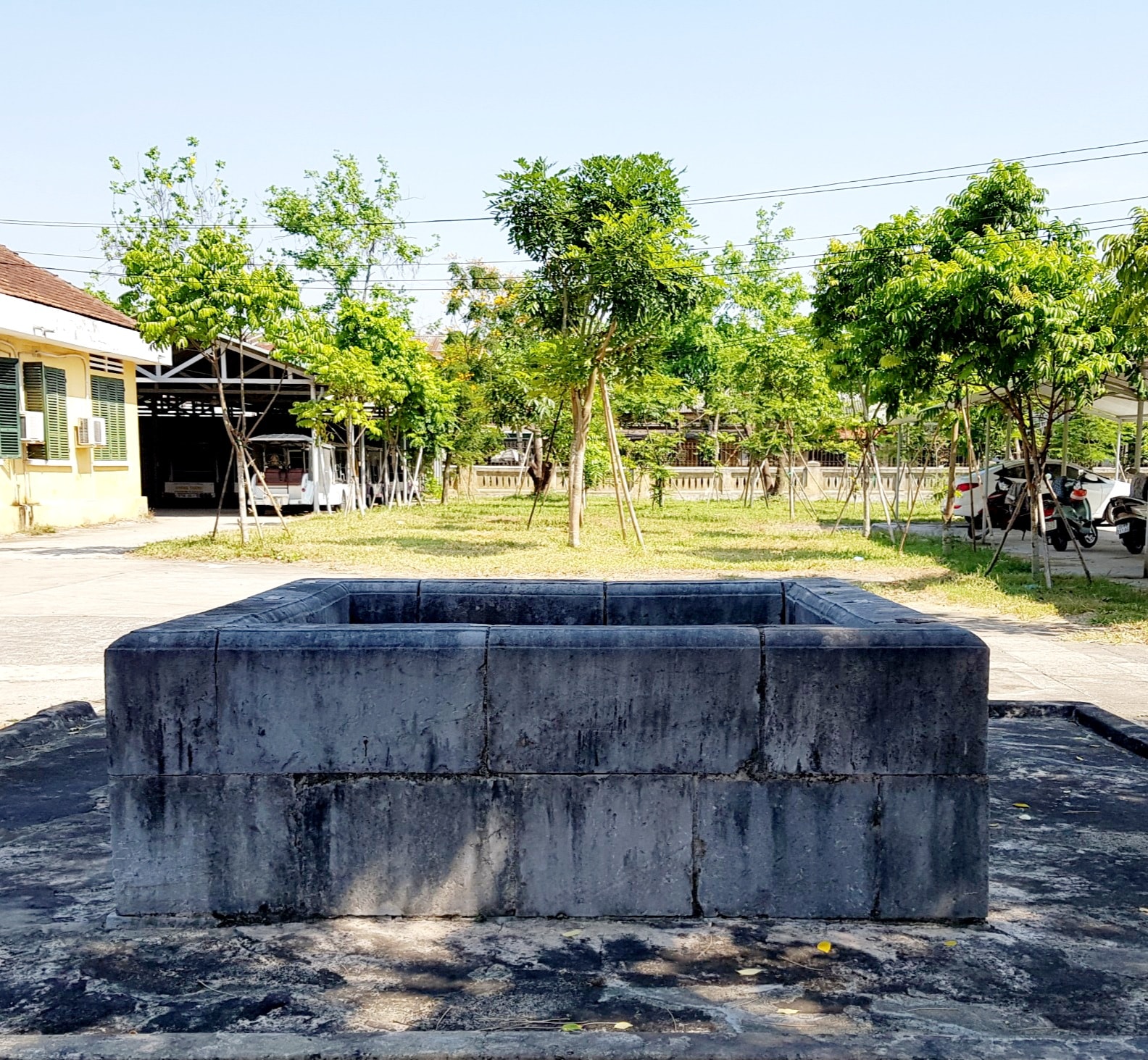
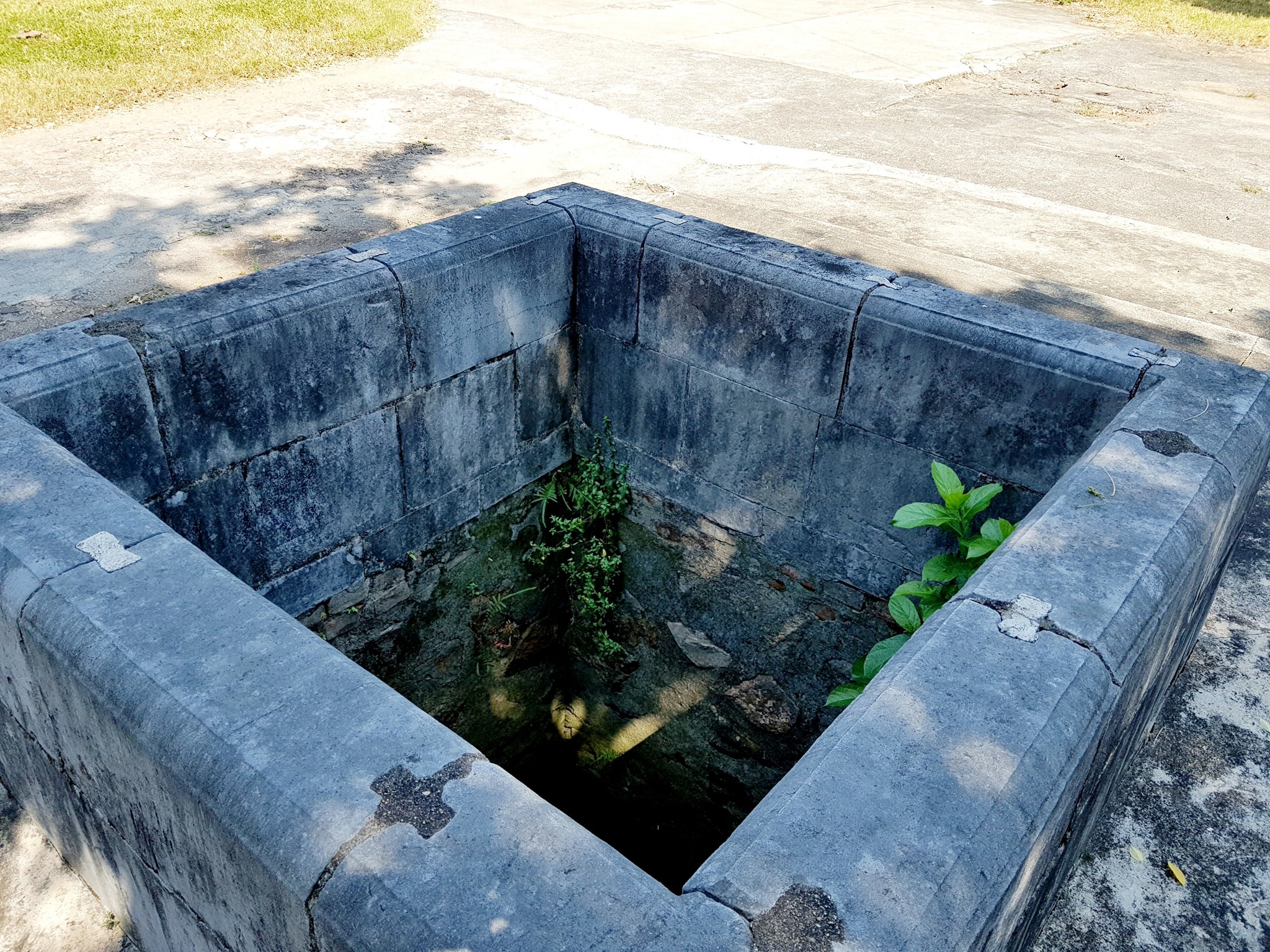
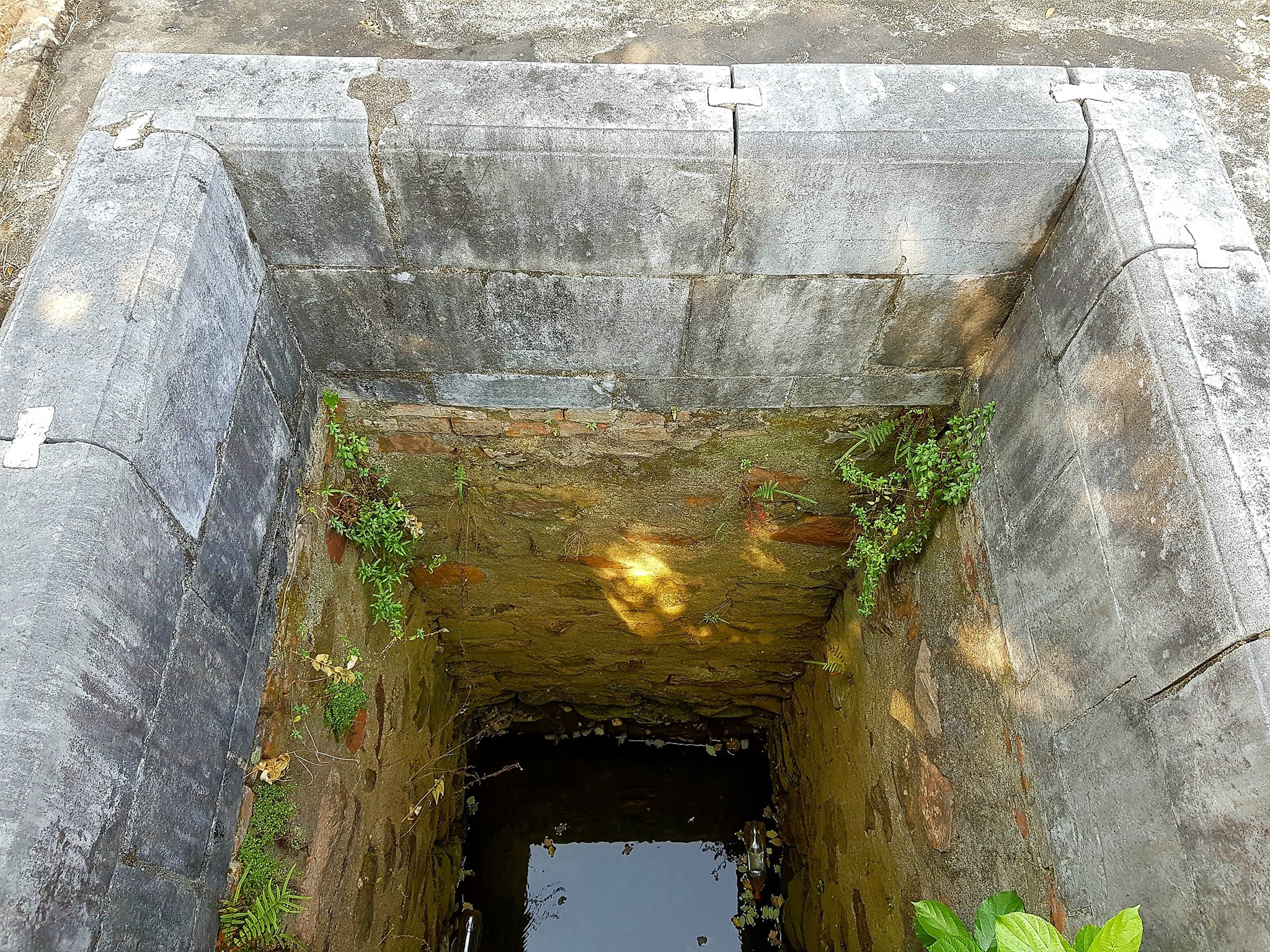
The well is located on the northern side of Duyet Thi Duong Theater, near Thieu Phuong Garden. This is an almost square well whose size is 153 cm x 154 cm. Moreover, if including the wall, the size increases to 223 cm x 225 cm. The 43 cm well wall is built of bluestone and covered with mortar. From the inside, the well is embanked with small bricks, no mortar is used. Currently the well is no longer in use, so the well bottom is filled with plants.
1.2. The round well in the southwestern side of Duyet Thi Duong Theater
The well lies near the gate to Ta Vu of Can Chanh Palace. This is an an exceptionally beautiful well, the bottom is round, which is 219 cm in diameter, or 276 cm in diameter if including the wall. The well wall is built of bricks, 23 cm in height. 110 cm from the wall is a set of steps which is 30 cm in height. Thus the well wall is 53cm above the ground. From the inside, 2 meters deep from the wall, the well is embanked with small bricks, below that 2 meters mark, it is embanked with mountain stones. The whole well is more than 4m deep, the well water is clear even though it has not been used for a long time.
1.3. The round well in the eastern side of Ta Vu (Can Chanh Palace)
People still uses the well. It is located right behind Ta Vu building of Can Chanh Palace. The well wall is built of bricks, 61 cm in height, 30 cm in thickness; the bottom of the well is 120 cm in diameter, or 180 cm in diameter, including the wall. The entire well from top to bottom is embanked with bricks, without the use of mortar. The well is about 5m in depth and its water is truly clear.
1.4. The square well in Luc Vien (concubine's residence) area
This well is located quite close to the central axis of the Hue Imperial City-Forbidden Purple City, but slightly towards the west, within the boundaries of the old Luc Vien.
The well is nearly square in shape, and is 160cm x 165cm in size. If including the wall, the size then is 223cm x 217cm. The well wall is built of bricks and covered with mortar; the wall is 27cm in height; from inside of the well, the embankment is made of two bluestones, each has a width of 25 cm; below the bluestone embankment to the bottom of the well is another embankment made of brick. The well is 4.9 m deep; its water is about 50 cm deep.
The wall of the well is tiled from the outside, each tile is about 3 m in width, the wall is 20 cm above the surrounding ground.
II.2.2. Area of ancestral temples:
The area of the five temples can be divided into 3 separate areas, each area has its own well and they are all square and quite similar in size. There is a total of five wells in the five temples, as follows: two are located in Trieu To Temple, one is located in Hung To Temple, and the other two are located in Phung Tien Temple.
2.1. The wells in Trieu To Temple:
- One well lies on the western side of the Temple, towards the northern flank wall of Than Tru building (or the kitchen) of Trieu To Temple. The well is square, its walls were built of bricks, the walls are 80 cm in height and 28 cm in thickness The well is 148 cm in width; The inner side of the well is embanked with mountain stones. At the moment, although the well is no longer in use, the water is noticeably clear, nearly 60cm in depth; The total depth of the well is 4.2 m.
- One well lies on the eastern side of the Temple, near the flank wall of Than Kho building (or the warehouse) of Trieu To Temple. The well has a very thick brick wall which is 47 cm in thickness and 43 cm in height (parts of the wall was probably broken intentionally). The well is square, 150 cm in width; the upper part of the well (including the wall) was embanked with 1 meter of bricks, the lower part was embank with mountain stones. Now the well has been filled in , it is only 2.6m in depth and has no water.
2.2. The wells in Hung To Temple
Just like the well on the western side of Trieu To Temple, the only well in Hung To Temple lies towards the northern flank wall of Than Tru building. At present, the well is still in regular use, so the water is very clear. The well wall was built of bricks and embanked with stones, its size is 61cm in height, 30 cm in thickness. From the inside, the well is 206 cm in width, its embankment is made of mountain stone from the top to the bottom. The well is 5.1 m in depth, of which the water is 1.55 m in depth.
2.3. The well in Phung Tien temple
- This well lies on the western side of the Temple, behind the Huu Vu building (Office of the Martial Mandarins) of the main Temple. The well wall was built of bricks; the upper part of the wall was damaged a little, the wall is 33 cm in height and 30 cm in thickness. From the inside, the well is square, 138 cm in width, with the embankment completely made of mountain stones. The well is 3.8 m in depth, of which the water is about 30 cm in depth.
- One well lies on the eastern side of the Temple, behind Ta Vu building of the main Temple. Like the well on the western side, the wall of this well was built of bricks, it is 58 cm in height but only 15 cm in thickness. From the inside, the well is square, 143 cm in width, the embankment was built from the top to the bottom, about 3 m in length; mountain stones are used for the embankment further below. The well is 5.1m in depth; meanwhile, the water is 1.1m in depth.
II.2.3. Palaces for Empress Dowagers and Grand Empress Dowagers
There are two palaces located on the western side of the Forbidden Purple City which were used as living quarters for Empress Dowagers and Grand Empress Dowagers of the Nguyen Dynasty. There are five wells in these two palaces, in which four are located within Dien Tho Palace and only one is in Truong Sanh Palace.
3.1. The square well on the southeastern side of Dien Tho Palace
The well is almost square, the well wall was built of bricks and covered with mortar, from the inside, the well's size is 184 cm x 194 cm, if including the wall, such size becomes 244 cm x 250 cm. In the inner side of the well, bricks are stacked from the bottom to the top. The well is 4 meters deep and its water is clear.
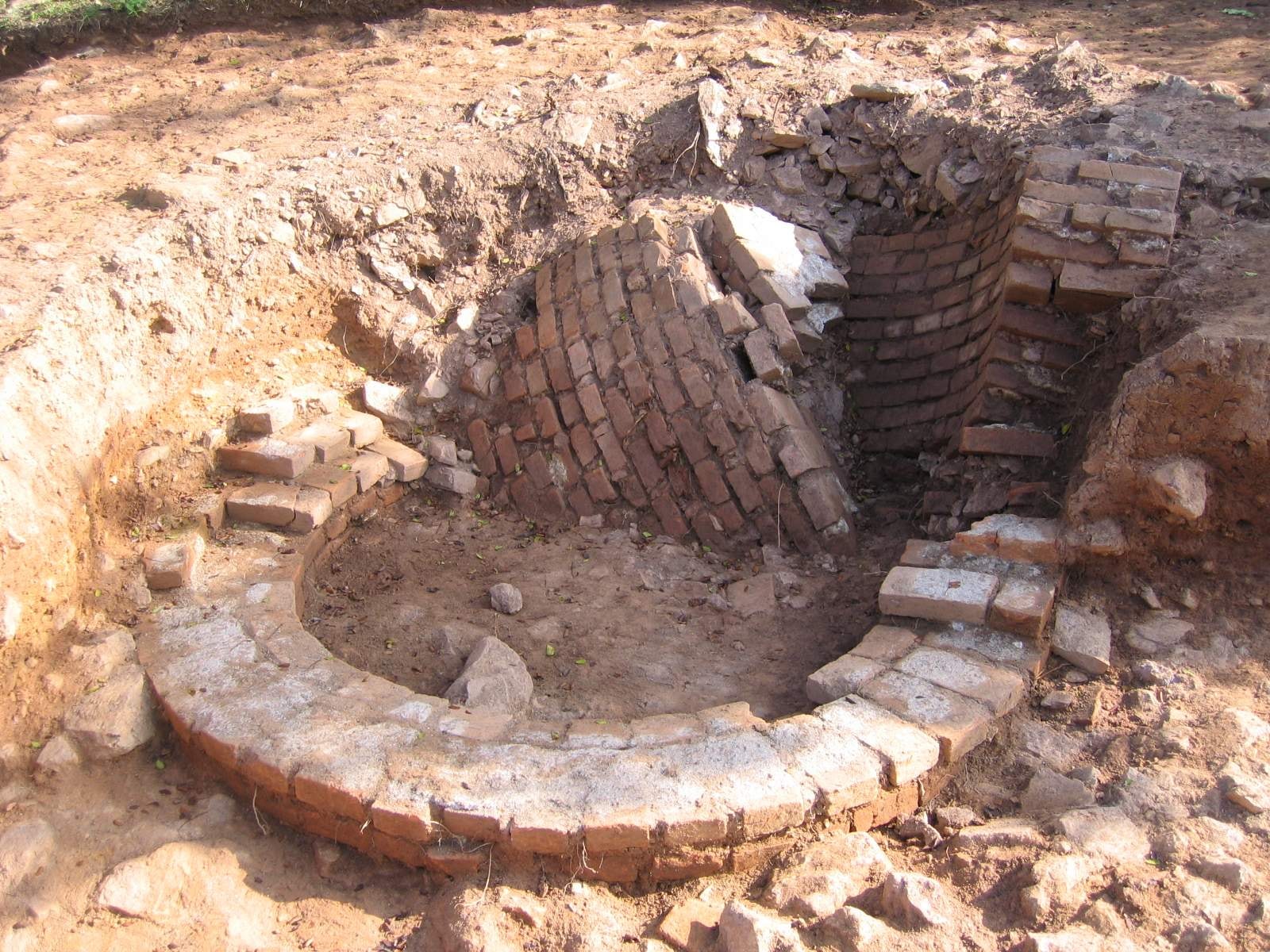
3.2. The square well on the northwestern side of Dien Tho Palace
This well is located near Khuong Ning Cac, a pagoda for the Empress Dowagers in Dien Tho Palace. The well is square, with dimensions of 177cm x 177cm. The well wall is built of bricks, 64cm in height, 30cm in thickness. In the inner side of the well, bricks are stacked from the base to the top . The well water is clear and deep.
3.3. The square well on the northeastern side of Tho Ninh Palace
This well has a really high walls, up to 124 cm, built with bricks, 30cm thick. The well is square, with dimensions of 170 cm x 170 cm and brick embankment. Currently, the well is no longer in use, so its bottom is filled with grass and debris.
3.4. The round well on the northeastern corner of Dien Tho Palace
The well is beautiful and still used for watering plants. This is a large round well with a diameter of 274cm. The well wall is built of bricks, 87 cm in height, 30 cm in thickness The well is about 5m deep, the whole inner side of the well is embanked with bricks.
3.5. The round well in Truong Sanh Palace
The well is located on the southeastern side of the Main Hall called Ngu Dai Dong Duong (meaning five generations living under a roof), close to the porch of Ta Vu building. The well is round, built of bricks, 101 cm in height, 15 cm in thickness. The well is more than 4 meters deep, bricks are used for 226 cm of embankment from the top of the well wall, embankment from that point below is made of mountain stones. Well water is quite clear and still being used.
II.2.4. The Imperial Treasury (Imperial Household Department)
The Palace of the Imperial Household Department is now the campus of the University of Arts, Hue University. According to witnesses who had been in and out of this area before 1975, there were four ancient wells in this area, which were all square wells and dug in a fairly balanced position with each other. But at present, due to the development of the University of Arts, Hue University, three wells have been filled and almost no trace of them can be found. The remaining square well is located on the southeastern side of the area, near Dong Khuyet Dai of the Imperial City. This well is still in use The wall of the well is built of brick, its outer side is covered with new cement. The wall is 71 cm in height and 20 cm in thickness. From the inner side, the well is 137 cm in width with embankment made of bricks. The well is 5 meters deep, of which the water is 1.7m deep; The water is quite clear and is used to service a university’s painting studio.
***
Thus, in the area of Imperial City - Forbidden Purple City, at least 18 wells were dug and used during the Nguyen Dynasty. Remarkably, these ancient wells are not mentioned in any official historical records of the Nguyen Dynasty, so it is impossible to determine their exact construction time. However, based on the construction specification of these wells, compared with the ancient wells at the tombs of Nguyen Emperors whose construction time can be accurately determined, we can confirm that the ancient well system in the area of Imperial City - Forbidden Purple City were built at the beginning of Nguyen Dynasty, at least from the reign of Emperor Tu Duc (1848-1883) and earlier.
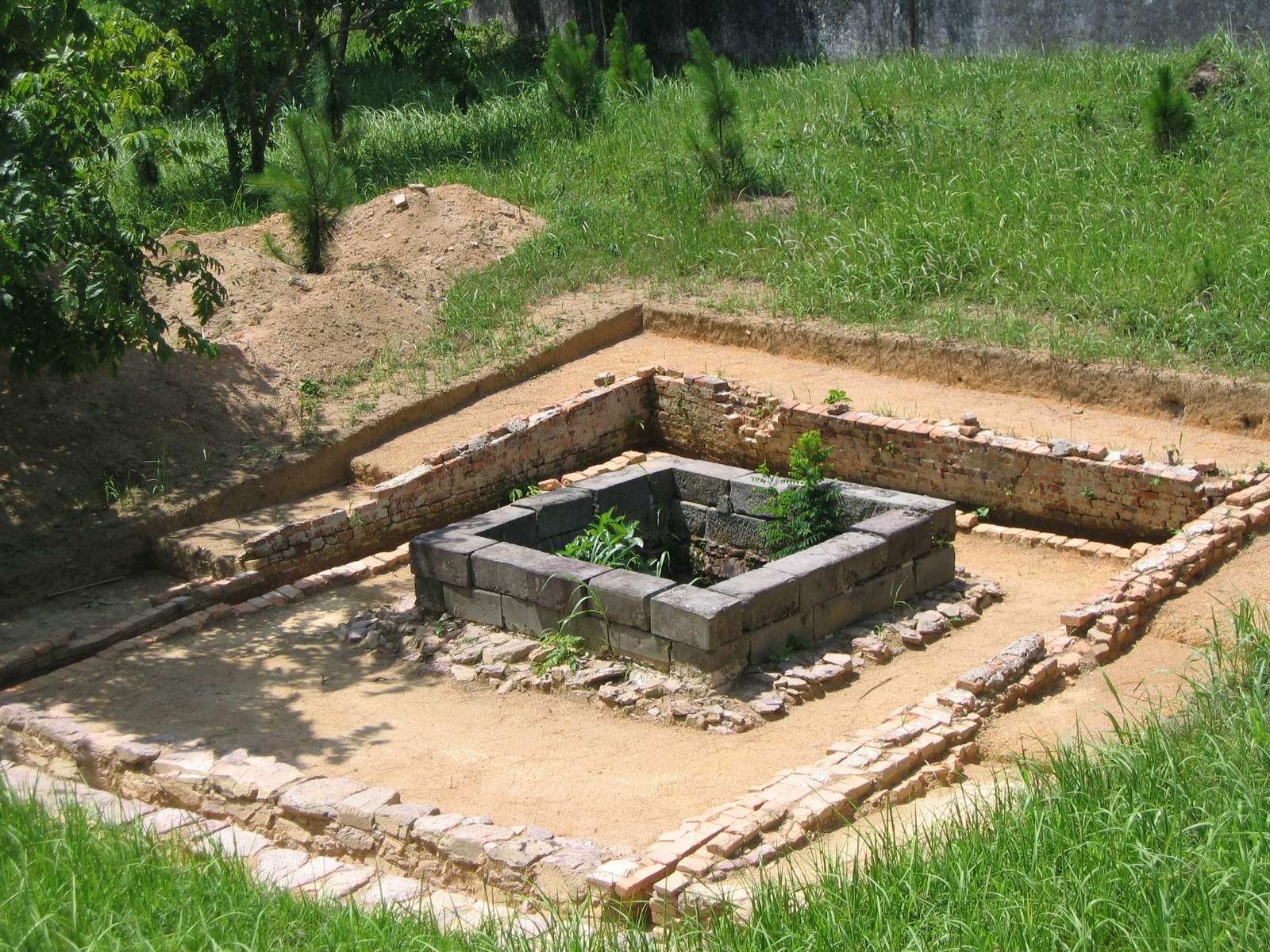
II.2. Ancient wells outside the Imperial City - Forbidden Purple City
In addition to the ancient well system in the Imperial City, ancient wells can also be found in other important imperial palaces of the Nguyen Dynasty, we would like to present a few as follows:
- There are two square wells at the headquarter of the Privy Council (now the headquarters of Hue Monuments Conservation Center):
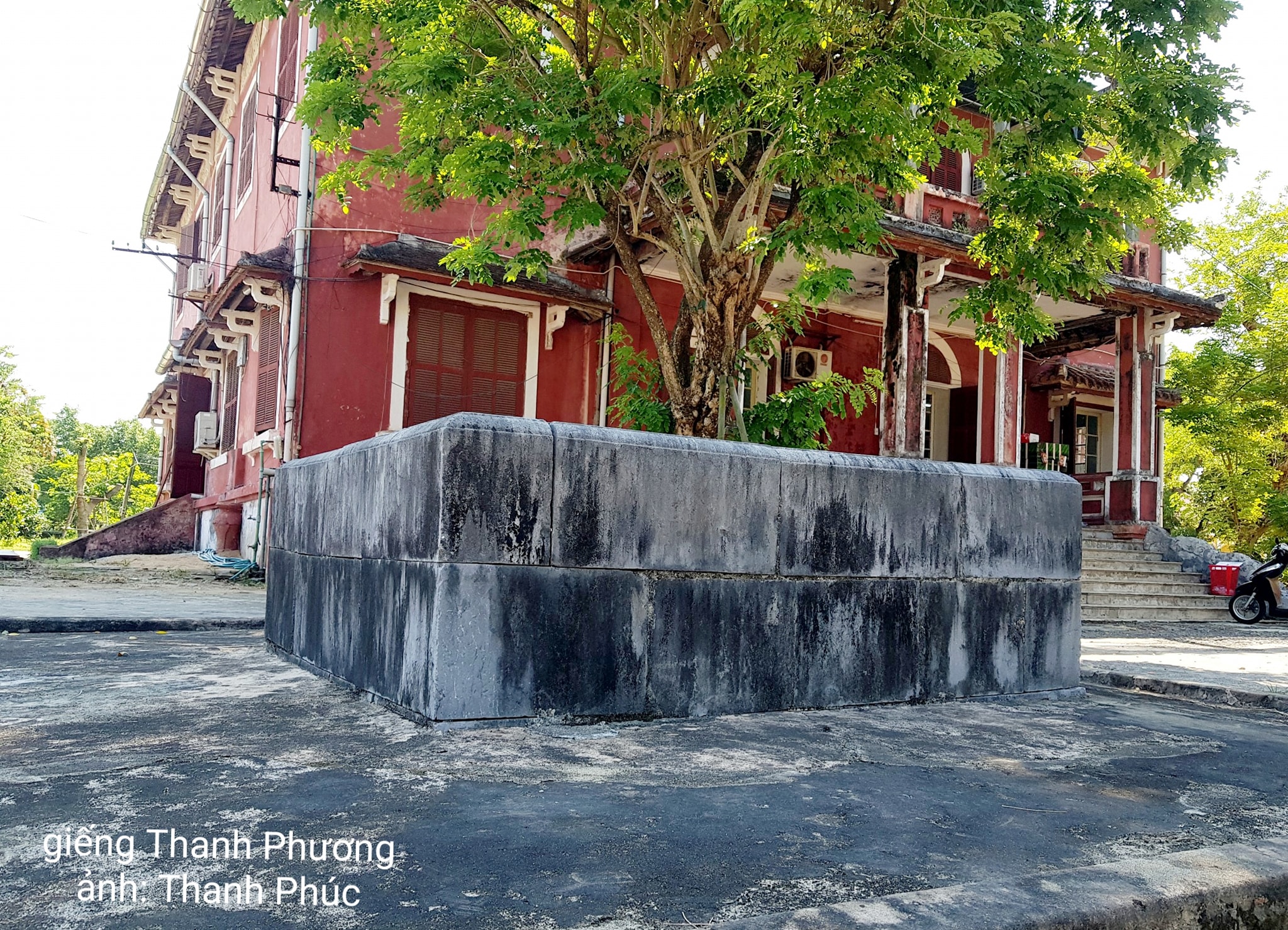
+ Thanh Phuong Well: Legend has it that this well dates back to the time of Nguyen Lords, when a Nguyen Lord based his capital in this area (between1738-1775). When Giac Hoang Pagoda, one of the four National Pagodas under the Nguyen Dynasty, was built here, the well was embellished and used by the Pagoda occupants forever after. The well was elaborately built on the eastern side of the headquarter of the Privy Council; its wall is built of bluestones, 26 cm in thickness and 70 cm in height. From the inside, the well is 155 cm in width with brick embankment. The well is 4.3 meters in depth, of which the water is 1.7m in depth. Near the well, there is also a bluestone sign engraved with the name of the well (Thanh Phuong tinh), The sign is now lost.
+ There is another square well located on the northeastern side of the headquarter of the Privy Council. Both the well wall and inner side of the well have embankment made of laterite. The wall is 25 cm thick and 79 cm high; from the inner side, the well is 167 cm in width. The well is 3.2m in depth, of which the water is 1m in depth and truly clear, still being used for watering plants.
- There is a square well located in Quoc Su Quang (the National Historiographer Office, now Nguyen Hue High School), legend has it that it was built when Quoc Su Quan was constructed by the Nguyen Dynasty here. The wall of the well is built of brick, the inner side of well is also embanked with bricks. Unfortunately, just 2 years ago, when building the sports stadium of Nguyen Hue High School, this ancient well was completely filled.
- Tomb of Emperor Gia Long has one square well in the worship area. The wall of the well is built of brick, the inner side of well is embanked with mountain stones, which is completely similar to the square wells in the Imperial City.
- Tomb of Emperor Minh Mang has two square wells placed symmetrically on both sides of Minh Lau Lodge, both of which are very beautiful wells with elaboratively-built bluestone wall and mountain stone embankment. These two wells are exactly of the same size, which is 220cm x 210cm, the well wall is 53 cm in height and 40 cm in width; The well is deep and its water is particularly clear.
- Tomb of Emperor Thieu Tri used to have two wells, currently there is one square well in front of Dien Lake (in front of the worship area) and one round well still retains its traces despite being backfilled (on the western side of Bieu Duc Palace). The square well has a brick wall which is 65 cm high and 20 cm thick. The well is 2.1 m in depth and has an inner brick embankment.
- Tomb of King Tu Duc has three wells, all of which are square wells. One is located right through Vu Khiem Gate; one lies behind Chi Kiem Duong and the last one can be found in the Tuan Loc Hien (reindeer barn). All three wells are elaborately built, with an average depth of about 5m; especially the well near Vu Khiem Gate has an exceptionally clear water and is still in use today.
- Tomb of Emperor Dong Khanh has one round well located in the western side of the lake in front of the worship area. The well has a brick wall which is 65 cm in height; the well is 1.5 m in diameter which is gradually smaller from the top to the bottom; inside of the well is completely embanked with stones; the well is 4.4 m in depth, in which, the current water level is 2.4m. The well is still in use.
III. SOME THOUGHTS ON THE TYPES AND LOCATIONS OF THE ANCIENT WELL SYSTEM IN HUE ROYAL ARCHITECTURE
III.1. Regarding the types and construction characteristic
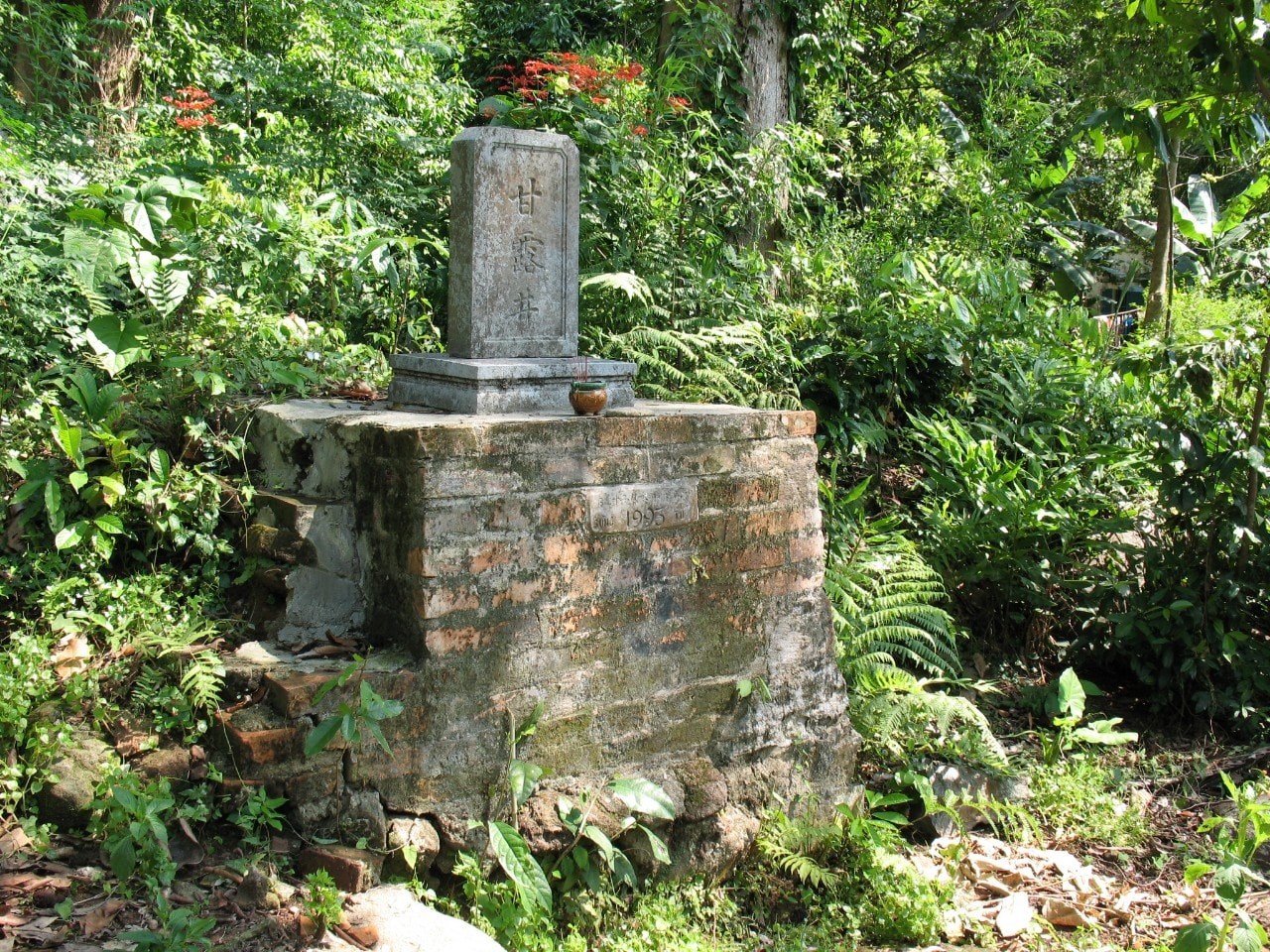
As for the types: Wells of the Nguyen Dynasty are categorized into square and round wells, but square wells account for the majority. According to our statistics, in the area of Imperial City - Forbidden Purple City, there are 14 square wells but only 4 round wells in the total of 18 wells. If we count the total number of wells on the whole Hue complex of monuments, there are 24 square wells, and only 6 round wells, of the total of 30 wells. The predominance in the number of square wells compared to round wells clearly shows the influence of Champa architectural style on the well digging techniques during the Nguyen Dynasty in Hue. As we know, all ancient wells discovered through archaeological excavations at the Imperial Citadel of Thang Long-Hanoi are round wells. This proves that throughout thousands of years of history, the dominant style of Vietnamese wells is round wells, which is totally different from the Champa square wells in Dang Trong. In the Imperial City of Hue during the Nguyen Dynasty, a diverse and elaborate well system, including round wells and square wells, was built based on the combination of our traditional well digging technique and advantages of Champa well engineering.
- As for the characteristics: An ancient well in Hue, whether round or square, has the following characteristics:
+ Solid brick or stone well wall (mainly mountain stones); each brick or stone is bonded by mortar; the average height of the well wall is 50-60cm; the average thickness is 30cm.
+ Embankment inside the well is carefully built, mainly of bricks or mountain stones (only in one well, of which, the embankment is built of laterite); no mortar is used to bond each brick or stone.
+ If the well has a brick embankment in the inner side, the bricks are laid horizontally on each other with the longest and thinnest side facing outward. This is slightly different from the inside brick embankment in some ancient wells discovered in Ba Dinh-Thang Long. Thanks to the inspection on some ancient wells discovered here, we find that there are two ways to build well's brick embankment as follows:
*The bricks are laid horizontally on each other but the side with the shortest length and width should face outward.
*The bricks are laid in a V-shape, creating waves of bricks that look like fish scales. If the well has a stone embankment in the inner side, the mountain stones are carefully cut and ground for a relative flatness. The stones are laid horizontally, the side with the longest length and shortest width should be face outward to increase stability for the embankment layer.
III.2. Characteristics of the well locations
Here we pay special attention to the locations of ancient wells in the area of the Imperial City-Forbidden Purple City. Some of these features are listed as follows:
- As the Courtyard was used for Imperial Ceremonies, there are no wells within this area. This may be due to the ancient Feng Shui belief: any land within the "dragon belly" should be left untouched to ensure the peace and stability of the Dynasty. Perhaps because of this concept, not only does the Courtyard not have any wells, but neither does the entire area along the central axis of the Imperial City-Forbidden Purple City, which we often call "the main axis area" (1).
- No well seems to be found in the northeastern side of the Imperial Garden. We think that there may have been wells here, but there was not so many of them and all were backfilled (2). Besides, there are many lakes and ponds in this location (the area of lakes and ponds accounts for about 3/4 of the whole place), so it is not necessary to have any wells.
- In the area of ancestral temples, the number of wells dug here is limited, specifically, each temple (despite its large area) only has 1 or 2 wells. Wells are located near the southwestern flank wall of the kitchen or warehouse for ease of use in cooking.
- In the Forbidden Purple City, the wells were mostly dug on the western side ( 3 out of 4 wells are located there), there is only one well on the western side, at Luc Vien. It should be noted that as we mentioned above, there are no wells along the central area. With only 4 wells on a large area (about 9 hectares) while there are many architectural works to serve the Emperor and the Royal Family, we are entitled to reason that The Nguyen Dynasty restricted the digging of wells in the Inner Court.
- The Palaces for the Empress Dowagers in the West were apparently not restricted from well digging, especially Dien Tho Palace (where four wells were dug during the Nguyen Dysnasty). This shows the special favor of the Nguyen Emperors for their mothers.
-- In addition, It should be noted that, in all areas where wells were dug during the Nguyen Dynasty (not only in the Imperial City-Forbidden Purple City but also all other monuments), despite their quantity, the wells mentioned above are located on both sides of the building's architectural axis or at hidden corners, and no wells are dug on the central axis of the architecture. This shows that well digging under Nguyen Dynasty was strictly followed the rules and principles of Feng Shui and architecture. However, this issue needs more investment and research, which we are continuing to work on.
It is important to note that, in the past, after digging a well, people very much abstained from backfilling it (3). The ancients have a saying: “Cải ấp bất cải tỉnh” (meaning you can change the place you live but not the well), coming from the fact that digging and building wells were not easy tasks, and they may violate the rules and principles of Feng Shui. Therefore, in our opinion, although the locations of palaces may be different over time, the ancient wells still remain in their places. We can rely on this characteristic to determine the original palace planning as well as the gradual change of the planning mentioned above.
III.3. In our opinion, preserving and promoting the value of ancient wells is also a matter of great concern.
After the fall of the Nguyen Dynasty, the new managers of the imperial architectural system seemed to no longer pay attention to the precious ancient wells. Only the wells located in place where the monument managers lived had a chance to be used, thus, such wells still exist to this day while the others were abandoned and gradually backfilled. Nevertheless, in the Complex of Hué Monuments, there are still dozens of wells, all of which are beautiful and elaborately built. If these wells were preserved and restored to serve cultural and tourist activities, they would certainly bring many positive results. Ancient wells are always attractive to tourists because they are always surrounded by mysterious legends. Those who have ever visited Beijing's Imperial Palace always want to see The Zhenfei Well with their own eyes - the well which the beautiful Consort Zhen of Emperor Guangxu was thrown into due to her disobedience against Empress Dowager T'zu-hsi!
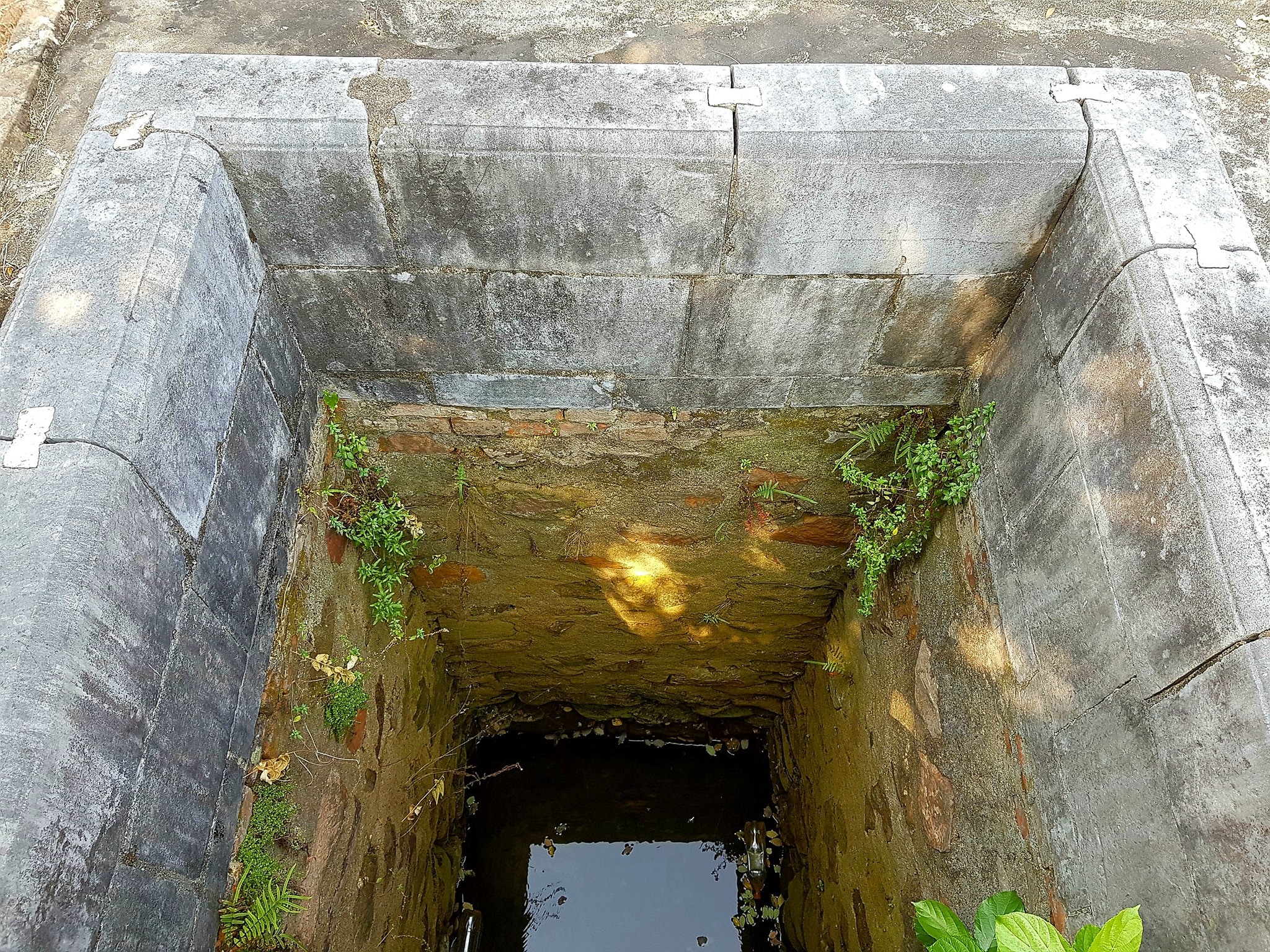
The ancient wells in the Hue Imperial City are equally attractive. We have witnessed many tourists standing in awe and wonderment next to the square well behind Vu Khiem Gate (Tomb of Emperor Tu Duc or the round well behind Ta Vu Building (Can Chanh Palace). It's a pity that we do not know how to promote our architectural history.! Imagine, in the middle of a sweltering summer, when you visit Dien Tho Palace, where once lived the Empress Dowagers of the Nguyen Dynasty, you can wash your face with the clear and cool water from an ancient well. How wonderful such an experience would be! Then when you take a rest, you are invited to drink a cup of fragrant tea made of such well water, while being told by the tea seller (or the tour guide) about the legends surrounding the ancient well, the elaborate tea processing and tea making of the Royalty...! Fresh and fragrant well water is also the best type of water used to make offerings to Buddha and Deities.
We hope that one day those ancient wells will be revived, so that tourists, especially couples who visit the Hue Imperial City, have the opportunity to use the well water or see themselves reflected from the clear surface. Just like that, the old poetry would be recited:
"The Ancient Capital well water is clear and fresh,
My love to you is blessed by the Buddha".
Notes:
1-The concept of "the main axis area" in a sense is almost similar to the concept of "Dung dao axis" in the ancient concept of geography. In terms of this concept, we have explained it in the article "New discoveries about the Imperial City and the Forbidden Purple City"; Archaeology Magazine, No. 1/1998.
2-In the eastern side of Co Ha garden, there is still a vestige of a square brick structure similar to that of an ancient well, but we have not verified whether this is a well dug during the Nguyen Dynasty or not due to lack of conditions for preliminary excavation.
3-This concept is still common in Hue. Hue people believe that each well is resided by a Well Deity. That's why, if the well is needed to be backfilled, a hollow bamboo stick will be put vertically into the well before filling to serve as a gateway for the Well Deity to enter or exit the well. When filling the well, a worship ceremony must be performed to announce the reason of such action.
Author: Phan Thanh Hai


 Tin liên quan


)